

We Are Expanding Our Services With qEEG Based Neurofeedback
SYMMETRY Neuro-PT uses advanced neurofeedback technology to create personalized brain training protocols to strengthen and guide brainwaves. The goal is to help the brain better regulate, thus often alleviating unwanted symptoms and behaviors.
The Information on this page includes:
An explanation of brain mapping and neurofeedback
Understanding the brain-map report
What the research says about neurofeedback
Introducing SYMMETRY's CEO
A mom on a mission, neurofeedback expert, and an alumni parent of a child who attended a residential therapeutic program.
WHAT ARE THE BENEFITS?
Neurofeedback provides numerous benefits. For people with behavioral issues, it can play an important role in building up a person’s confidence and belief that they can change. In terms of emotional stress and anxiety, it helps retrain the brain to respond more positively to stimuli that produces distressing emotions.
In particular, clients have reported enhanced memory and focus, decreased impulsivity and anxiety, better mental clarity, more restful sleep, improved mood, and a host of other benefits after using neurofeedback. The benefits of neurofeedback are long-lasting. Because the brain has actually learned (or relearned) a more efficient way of functioning, it will continue to create new pathways even after the neurofeedback session has ended.
Neurofeedback has been used successfully to improve many conditions including, but not limited to:
ADD/ADHD • Addictions • Anxiety
Autism spectrum disorder • Behavioral disorders • Bipolar disorder
Chronic pain • Depression • Headaches
Memory problems • Pain management • PTSD
Schizophrenia • Sleep problems and Traumatic brain injury/concussions
The SYMMETRY Neuro-Pathway technology provides two important interventions:
(1) qEEG Brain Mapping
(2) Neurofeedback Training
The Quantitative Electroencephalogram (qEEG), often referred to as a brain map, is a method of measuring and analyzing brainwave patterns by recording and measuring electrical activity in the brain with a specialized cap, amplifier, and software. Much like taking a temperature, we can get a snapshot of how well the brain is functioning by comparing these recordings to a normative database.
The process is simple, painless and provides valuable information on what areas of the brain are properly ordered and which are not.
The qEEG provides a snapshot of the brain’s activity and can be helpful in many ways including:
- Providing objective information used to create your personalized neurofeedback program
- Enhance the therapeutic relationship
- Showing how your brain wave patterns can be improved
- Measuring the progress of different therapies and treatments

qEEG brain maps are now included in our therapeutic program and will be made available to all students.
Neuro-pathway training (neurofeedback) is a series of non-invasive, medication-free, neurofeedback sessions created from the qEEG specifically to better regulate the client’s brain. Brainwave activity is measured by sensors on the scalp while the client watches a video and receives real-time feedback in the form of visual and audio rewards. The goal of all neurofeedback is to help the brain better regulate by producing healthier patterns.
Neurofeedback Now Available
Neurofeedback sessions will be available through SYMMETRY Neuro-Pathway Training. Research has demonstrated that permanent change can occur after 20 sessions. SYMMETRY will be offering a 40 session protocol for a discounted rate.
Understanding Your Child's qEEG Report
The data recorded is compared to a validated normative database and used in conjunction with biopsychosocial assessments to gain valuable insight into that individual’s functioning.
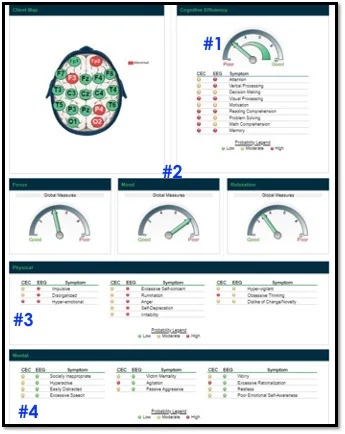


Shows the cognitive-emotional self assessment side by side with the corresponding neural activity associated with those areas.
Using therapeutic terminology, neural networks and activity are grouped by Focus, Mood and Relaxation to show the level of dysregulation in the brain.
Highlights all the areas where the self assessment and the brain map were congruent. This is a validating experience and the software will create a neurofeedback protocol to help the brain better regulate these areas.
Shows where the self identified expressed symptoms are not due to neural dysregulation. This is an opportunity to expand the therapeutic conversation and explore the environmental factors that may be causing this.
The short video will explain the format and contents of our qEEG 'Client Report'
WHAT THE RESEARCH SAYS ABOUT NEUROFEEDBACK
Research confirms the effectiveness of neurofeedback as a therapy for many conditions. Here are some highlights from the wealth of science supporting neurofeedback therapy.
ADD/ADHD: In a review of existing research, when children with ADD/ADHD did neurofeedback therapy, their teachers noted significant improvements in attention. However, the children’s parents noticed not only significant improvements in attention but also in impulsivity and hyperactivity.
Depression: A 2017 study found that people with treatment-resistant depression saw improvements in their symptoms and a reduction in functional impairments following treatment with neurofeedback.
Anxiety: In a 2011 case study on two patients with anxiety, both of them reported a significant reduction in anxiety symptoms after treatment with neurofeedback, and a year later, they were symptom-free.
Memory: Research in Alzheimer’s and Dementia found that after a series of neurofeedback sessions, study participants displayed significant improvements in recall and working memory.
Traumatic brain injury (TBI): An overview of the use of neurofeedback for people who have suffered a TBI suggests that TBI survivors may reduce symptoms related to attention, mood, and mindfulness while improving motivation for treatment.
PTSD: Compared to a control group, 28 people with chronic PTSD who did neurofeedback therapy experienced significant improvements in their symptoms and in emotion regulation.
Addictions: A study by scientists at UCLA found that neurofeedback improves abstinence rates in people with addictions.
International Society for Neurofeedback Research Website Video – What is Neurofeedback