
What Happens to the Brain During Menopause?
Brain fog. Broken sleep. Trouble concentrating. Anxiety that seems to come out of nowhere.
A lot of women know something feels different during perimenopause and menopause, even when they have a hard time explaining exactly what changed.

Research is finally beginning to look more closely at the menopause brain, but there is an important distinction that often gets lost in the headlines.
Most large menopause brain studies measure brain structure. Far fewer measure brain activity.
An MRI can show us the size and structure of the brain. EEG measures its electrical activity.
Both can tell us something useful, but they answer very different questions.
And that may help explain why recent menopause studies have produced very different headlines while women are still asking the same basic question:
"What is actually happening in my brain?"
Does menopause change the brain?
Research suggests the brain does change during menopause, but scientists are still working to understand exactly what changes, when those changes occur and what they mean.
In January 2026, researchers at the University of Cambridge reported that menopause was associated with less gray matter in certain areas of the brain, along with more anxiety, depression and sleep problems.
The headlines quickly became some version of:
Menopause shrinks your brain.
Then another study came out.
Researchers publishing in Nature Communications reported that the normal age-related decline in gray matter appeared to pause during the menopause transition.
Suddenly the headline sounded very different.
Brain changes take a break during menopause.
So which one is right?
Possibly pieces of both.
The studies looked at different groups of women in different ways. But they also had something important in common.
They were looking primarily at the structure of the brain.
Neither was measuring the brain's electrical activity.
What is the difference between MRI and EEG?
An MRI gives us information about the physical structure of the brain, including the size and volume of brain tissue.
An EEG, or electroencephalogram, measures electrical activity produced by the brain.
That distinction becomes especially interesting when women are describing changes such as brain fog, disrupted sleep, difficulty concentrating or feeling like their brain simply isn't functioning the way it used to.
A structural scan can give us valuable information without necessarily explaining what someone is experiencing day to day.
Which raises a question that doesn't get asked often enough:
We spend a lot of time studying what the brain looks like. Why do we so rarely study what it's doing?
What does EEG research show about menopause?
The short answer is that we don't know enough yet.
Research specifically looking at menopause and brainwave activity is surprisingly limited, and the studies that exist have not produced one consistent pattern.
A 2024 EEG study found higher alpha and beta power in women during early postmenopause.
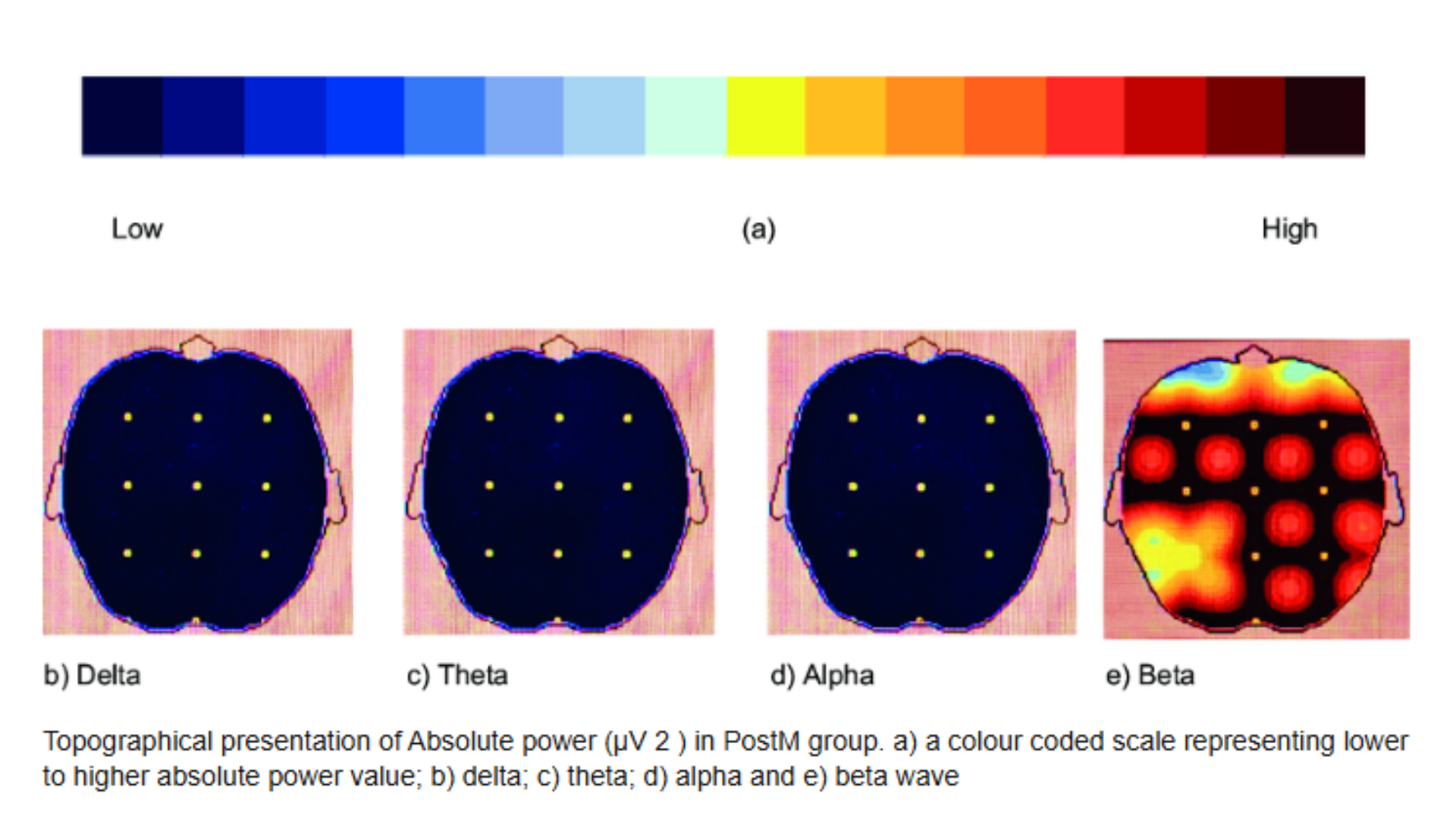
But a 2025 quantitative EEG study comparing 20 postmenopausal women with 20 premenopausal women found significantly lower delta, theta and alpha absolute power and significantly higher beta power in the postmenopausal group.
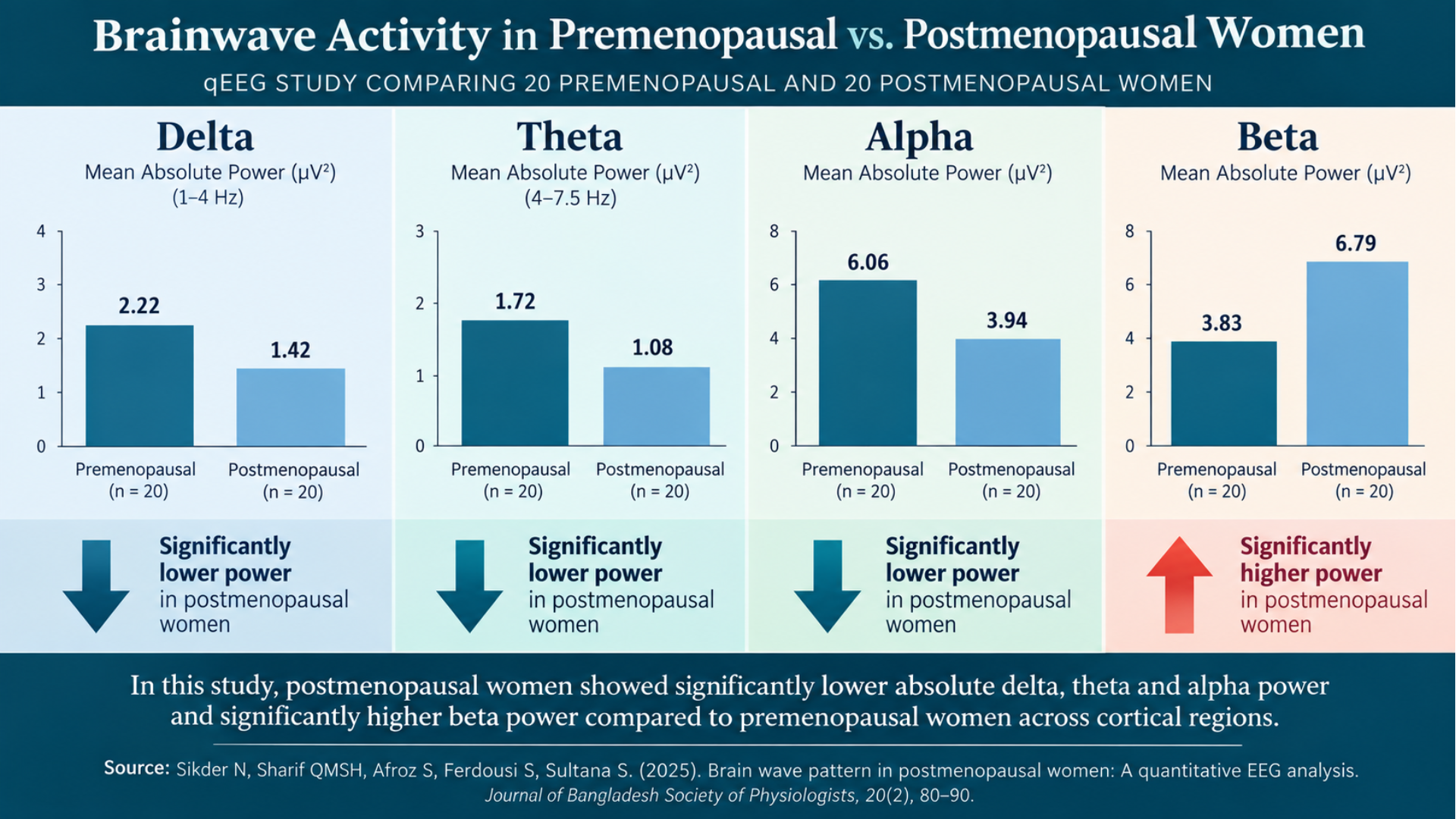
Those findings don't completely agree.
That doesn't mean EEG has nothing to tell us.
It means this area of research is still very early.
The large structural studies can include thousands of scans. The EEG studies are much smaller.
Right now, we simply don't have enough research to say there is one definitive brainwave pattern associated with menopause.
Is brain fog common during menopause?

Yes. Memory lapses, slower thinking and difficulty concentrating are commonly reported during the menopause transition.
What's especially interesting is that what women notice doesn't always show up clearly on conventional cognitive testing.
In the Cambridge research, postmenopausal women who were not using hormone replacement therapy had slower reaction times, but researchers did not find significant differences between groups on memory tasks.
That leaves a gap between what a woman experiences and what traditional testing measures.
It doesn't mean every symptom is caused by menopause.
And it doesn't mean an EEG can diagnose the cause of brain fog.
It does mean there may be more happening with brain function than a structural scan or a standard cognitive test can explain on its own.
Does the female brain change only during menopause?
No. The female brain changes across multiple stages of life.
The Nature Communications study looked at brain changes associated with puberty, pregnancy and menopause.
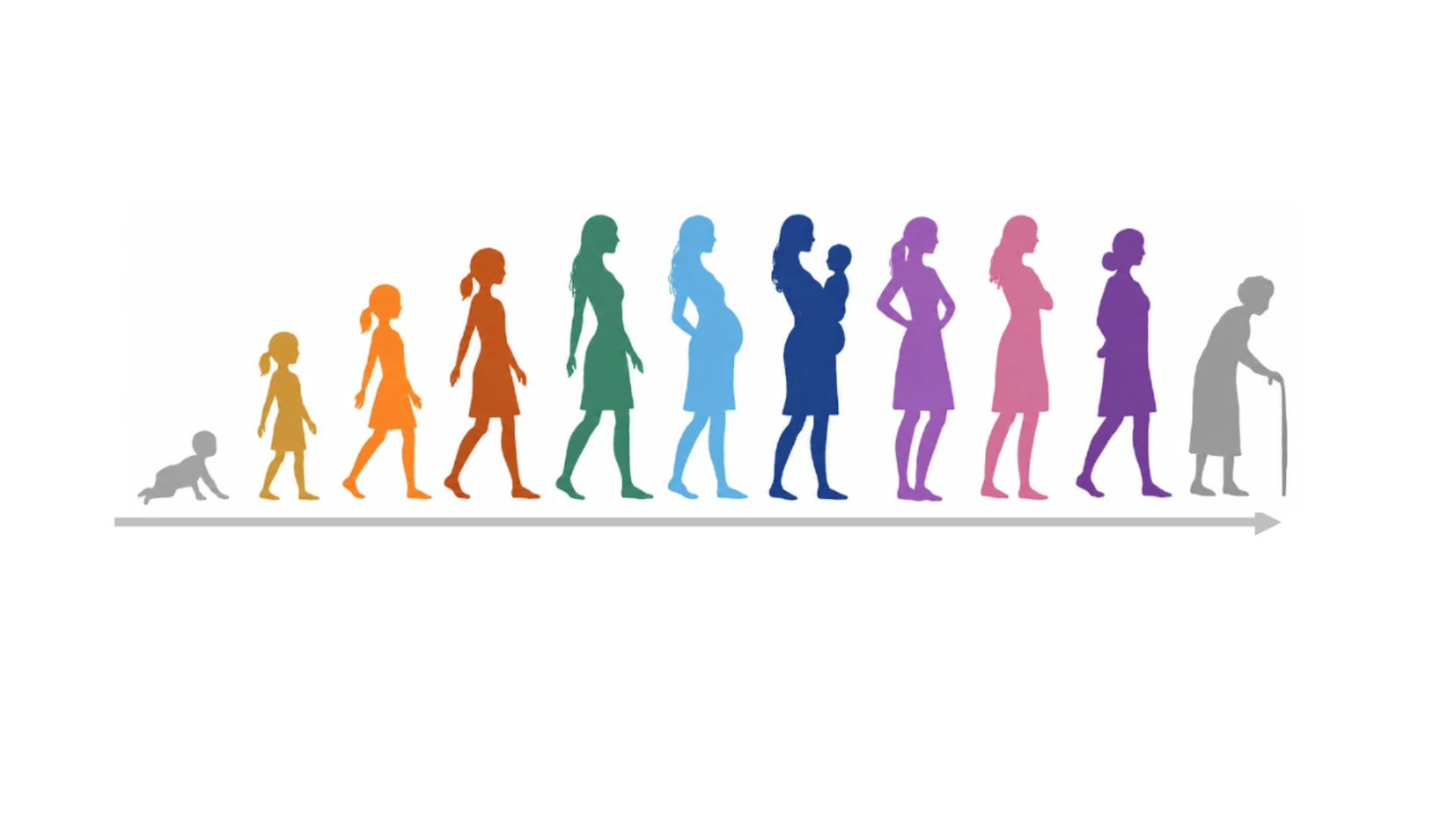
Pregnancy itself has been associated with substantial changes in brain structure. Researchers have described some of those changes as a form of neural fine-tuning, rather than simply interpreting a decrease in brain volume as something negative.
That distinction matters.
Puberty.
Pregnancy.
Postpartum.
Perimenopause.
Menopause.
These are all major biological transitions.
The more useful question may be how the individual woman's brain is functioning as she moves through them.
Why brain activity deserves more attention
This is where the menopause conversation starts to become bigger than hormones alone.
Hormones clearly matter, but hormones and brain activity aren't the same measurement.
If a woman is struggling with sleep, concentration, mood or cognitive changes, knowing what is happening hormonally may answer one part of the question.
Knowing how her brain is functioning may answer another.
What is a qEEG brain map?
A qEEG brain map begins with EEG data recorded from sensors placed on the scalp.
That electrical activity can then be analyzed quantitatively to identify patterns in how the brain is functioning.
A qEEG is not an MRI.
It does not show the physical size of the brain.
It also does not diagnose menopause.
Instead, it gives us information about electrical brain activity and brainwave patterns.
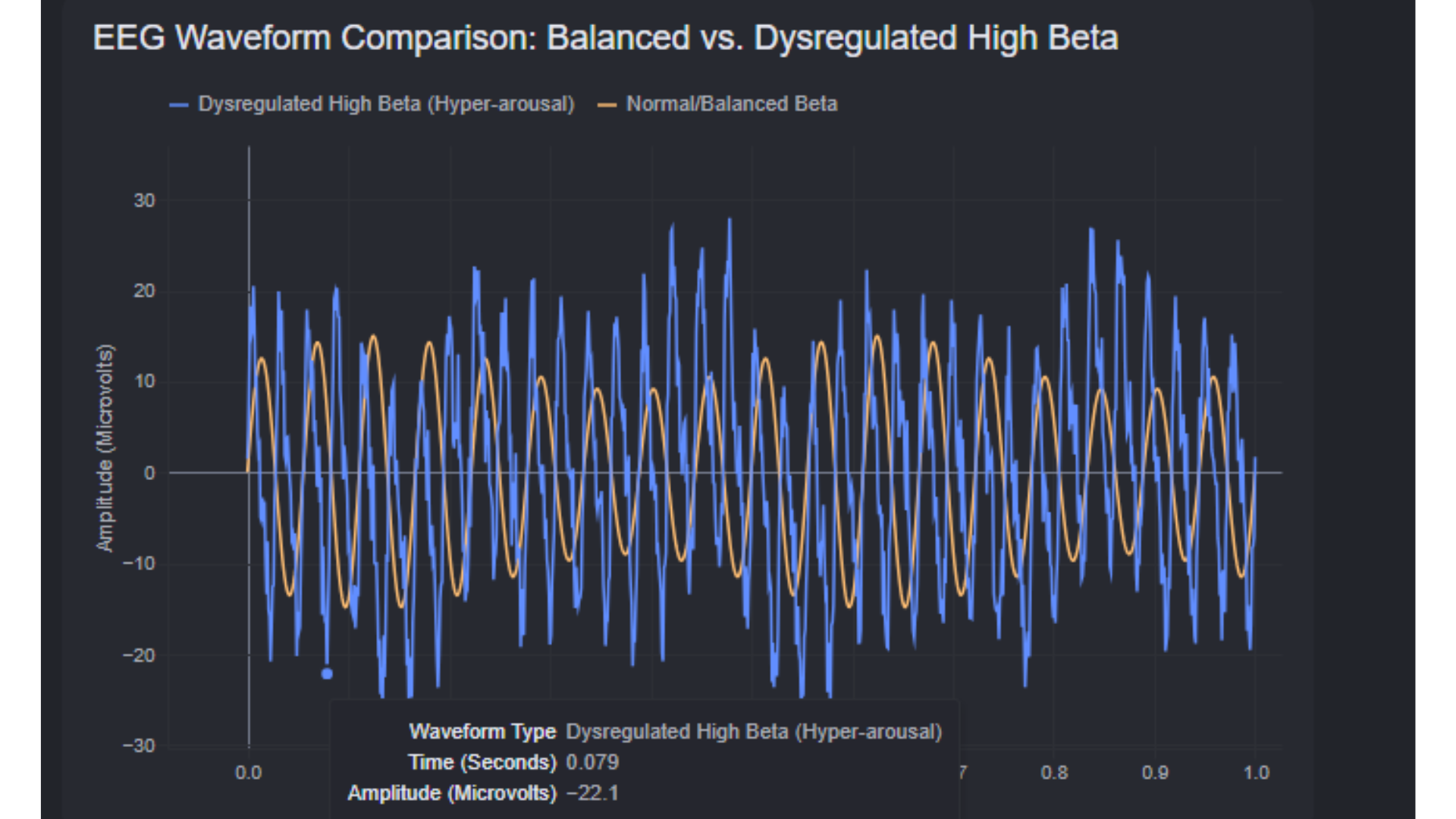
In my own work reviewing brain maps, I often see women in this stage of life with elevated alpha, sometimes slower alpha, along with dysregulated beta patterns that can correlate with anxiety and challenges with mood regulation.
That's an observation from my own work.It is not a published finding showing that menopause causes those patterns.
Some of what I see overlaps with pieces of the published EEG research, but the menopause-specific evidence is still too limited to say there is one standard "menopause brain map."
Has Neurofeedback been studied for menopause symptoms?
One small 2015 pilot study included 12 women experiencing hot flashes who used an EEG-based technology that translated their brain frequencies into tones.
Researchers reported fewer and less severe hot flashes, fewer symptoms of insomnia and depression, and changes in high-frequency brain activity.
Twelve women is a very small study.
The technology used in that research was also different from the neurofeedback approach we use at SYMMETRY Neuro-Pathway Training.
So this study does not establish neurofeedback as a proven intervention for menopause symptoms.
What it does show is that the relationship between brain activity and menopause symptoms deserves more research.
Why is menopause brain research still so limited?
That question has finally begun getting national attention.
In September 2026, the Senate Special Committee on Aging held the first congressional hearing devoted specifically to menopause, called “Half the Country, Zero Hearings.” The hearing focused on gaps in menopause research, professional training and care. Senate Aging Committee
The title was fitting.
Half the population will experience menopause, yet when you narrow the question from menopause generally to what happens to electrical brain activity during menopause, the research becomes remarkably thin.
We know far more about structural changes than we know about what the brain is actually doing.
So what do we really know about menopause and the brain?
We know women commonly report changes in focus, memory, sleep and mood during this transition.
We know structural brain changes occur across the female lifespan.
We have early research suggesting electrical brain activity may also differ after menopause.
What we don't have yet is enough large, high-quality EEG research to tell us exactly how brainwave activity changes through perimenopause and menopause or how those changes relate to what an individual woman experiences.
And that is the piece I think deserves far more attention.
Because telling a woman what happens to gray matter across a population isn't necessarily the same thing as answering the question she actually wants answered:
What is my brain doing?
Can a qEEG tell you what your brain is doing?
A qEEG Brain Map measures electrical brain activity and gives us individualized information about the brainwave patterns being recorded.
It can't tell you whether menopause caused a particular pattern, and it isn't used to diagnose menopause.
But it can give you another piece of information about how your brain is functioning right now.
For generations, women have been told some version of:
“It's all in your head.”
Well, some of what women are experiencing is happening in the brain.
That's exactly why we should be more interested in measuring it.
Want to see what your own brain is doing?
An MRI shows brain structure. A qEEG Brain Map measures electrical brain activity, giving you information about your individual brainwave patterns and regulation.
Frequently Asked Questions
Brain fog is commonly reported during perimenopause and menopause and may include memory lapses, slower thinking and difficulty concentrating. Research also suggests that what women experience does not always correspond neatly with performance on standard cognitive tests.
It's more complicated than that headline suggests. The Cambridge research found lower gray matter volume associated with menopause, while the later Nature Communications research found that normal age-related gray matter decline appeared to pause during the menopause transition.
Small EEG studies suggest differences in brainwave activity between premenopausal and postmenopausal women. A 2024 study and a 2025 qEEG study reported different patterns, which is one reason more research is needed.
Not at this point. Research specifically examining neurofeedback or related EEG-based technologies for menopause symptoms is very limited. A small 2015 pilot study produced interesting findings, but 12 participants are nowhere near enough to establish neurofeedback as a proven menopause intervention.
contact
social
SYMMETRY Neuro-Pathway Training © 2025