
#003 — Why Isn’t the Wellness Industry Measuring Brainwaves?
Most explanations point to technological barriers, cost, and complexity. Historically, measuring brainwave activity required bulky clinical equipment and specialized expertise. But that’s not the full story. The deeper issue isn’t just technological — it’s conceptual. Modern wellness has been built around the body, while largely overlooking the brain.
The $7 Trillion Wellness Industry — and a Growing Tension
It’s now a nearly seven-trillion-dollar market.
And still growing.
Professionals are investing hundreds of thousands of dollars into wellness equipment and protocols because they genuinely want better outcomes.
The numbers are real.
But the size of the industry isn’t the most interesting part.
The real tension lies in how wellness solutions are designed.

The Two Extremes in Modern Wellness
When Wellness Becomes Overcomplicated
Some approaches become so complex that no real human can sustain them consistently.
Optimization stacking.
Tracking everything.
Layering modality after modality.

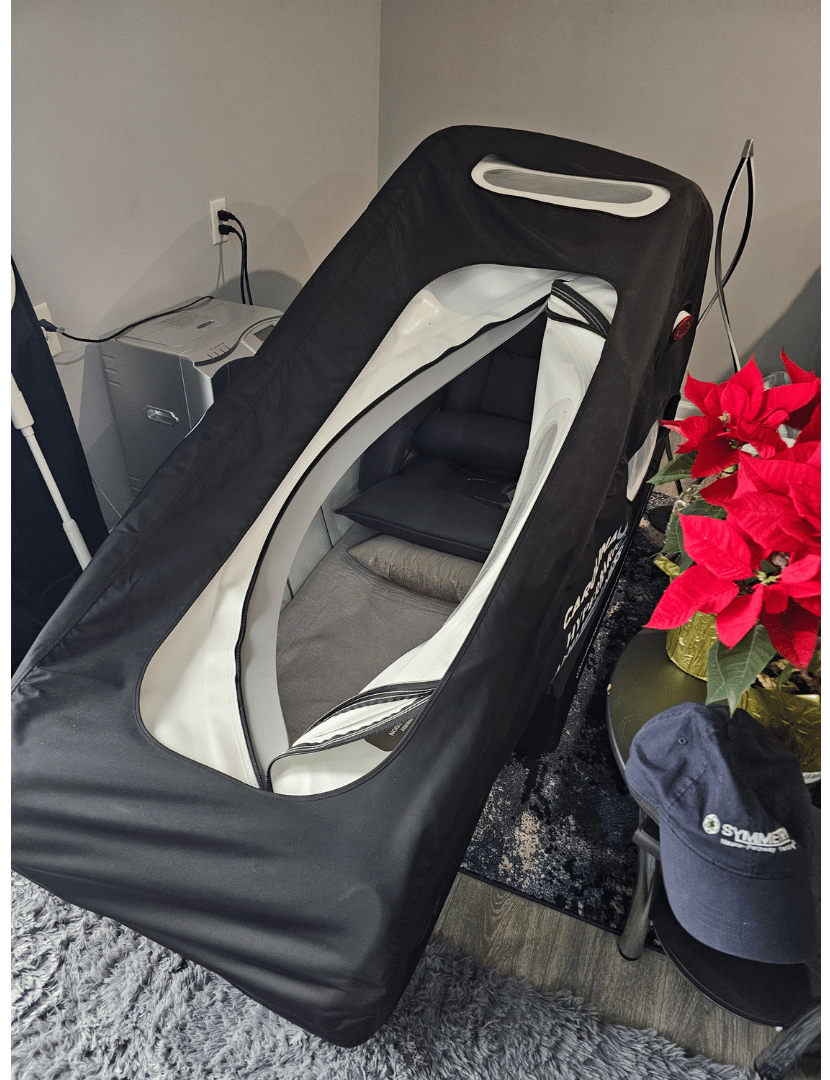

When Wellness Becomes Oversimplified
Other approaches swing the opposite direction — reducing health to surface-level physical interventions while overlooking the nervous system and brain entirely.
Both extremes miss something fundamental.
What’s Missing? The Brain.
We keep stacking physical interventions on top of an unmeasured, dysregulated nervous system — and then wonder why progress stalls.
Brainwaves are the electrical activity of the brain. They shape how we respond, recover, focus, and adapt.
If we’re not measuring brainwave activity, we’re missing the foundation everything else depends on.
Why Isn’t the Wellness Industry Measuring Brainwaves?
Here’s where most explanations focus:
- Signal-to-noise challenges in EEG technology
- High equipment costs
- Lack of standardization
- Complex data interpretation
And yes — those barriers have historically been real.
But even as technology advances, a deeper issue remains:
Wellness has largely centered on the body.
The brain has been treated as specialized, clinical, or separate — rather than foundational.
Watch the Video: Why Isn’t the Wellness Industry Measuring Brainwaves?
What Does It Mean to Measure Brainwaves?
Measuring brainwaves involves recording the brain’s electrical activity using non-invasive sensors.
This allows practitioners to:
- Identify patterns of dysregulation
- Establish a baseline
- Track measurable change over time
Instead of guessing. Instead of assuming. Instead of reducing everything to a label.
Measurement creates clarity.
Beyond Measurement: Training the Brain
Measuring brainwave activity is only the first step.
Neurofeedback provides real-time feedback so the brain can learn to regulate more efficiently.
Through repetition, the brain strengthens adaptive patterns — a process known as neuroplasticity.
Over time, this training supports:
- Improved regulation
- Greater resilience
- Flexibility under stress
This isn’t about replacing physical wellness practices.
It’s about facilitating measurable change.
Motion vs. Measurable Progress
In an industry that keeps adding more tools and more promises — while swinging between overcomplicating and oversimplifying — we rarely stop to look at the brain.
That’s the blind spot.
Until we measure it — and intentionally train it — we’ll keep cycling between extremes.
Confusing activity with real progress.
And the brain will remain the most overlooked variable in wellness.

FAQ Section
Frequently Asked Questions
Why isn’t brainwave measurement more common in wellness?
Historically, brainwave measurement required clinical EEG equipment and specialized expertise. However, advances in technology are making brainwave regulation and neurofeedback more accessible. The larger barrier may be conceptual — wellness has traditionally focused on physical systems rather than neurological regulation.
What are brainwaves?
Brainwaves are the electrical patterns produced by the brain. They reflect how the brain is functioning in real time and influence focus, stress response, recovery, and cognitive flexibility.
Can brainwaves actually change?
Yes. The brain changes through repetition and experience — a process known as neuroplasticity. With training, brainwave patterns can become more regulated and adaptive over time.
What is neurofeedback?
Neurofeedback is a form of brain training that provides real-time feedback about brainwave activity, allowing the brain to adjust and strengthen more efficient patterns.
Curious What the Brain Is Actually Doing?
Whether you’re a practitioner looking to enhance outcomes or someone investing in your own wellness —
the next step isn’t adding another modality.
It’s clarity.
Start by telling us a little about you, and we’ll guide you to the right next step.
 Book a Discovery Call with SYMMETRY Neuro‑PT
 Start here
If you haven't read our last article, Relief Doesn’t Equal Resilience, you should, click here to learn why suppressing symptoms isn’t the same as restoring resilience.
contact
social
SYMMETRY Neuro-Pathway Training © 2025