
[#005]“FDA Registered” Is Not the Flex People Think It Is
The Subject Line That Gave Me Pause
It started with a marketing email.
Not from a random marketer. Instead, from a therapeutic program for young adults.
A program I was aware of.
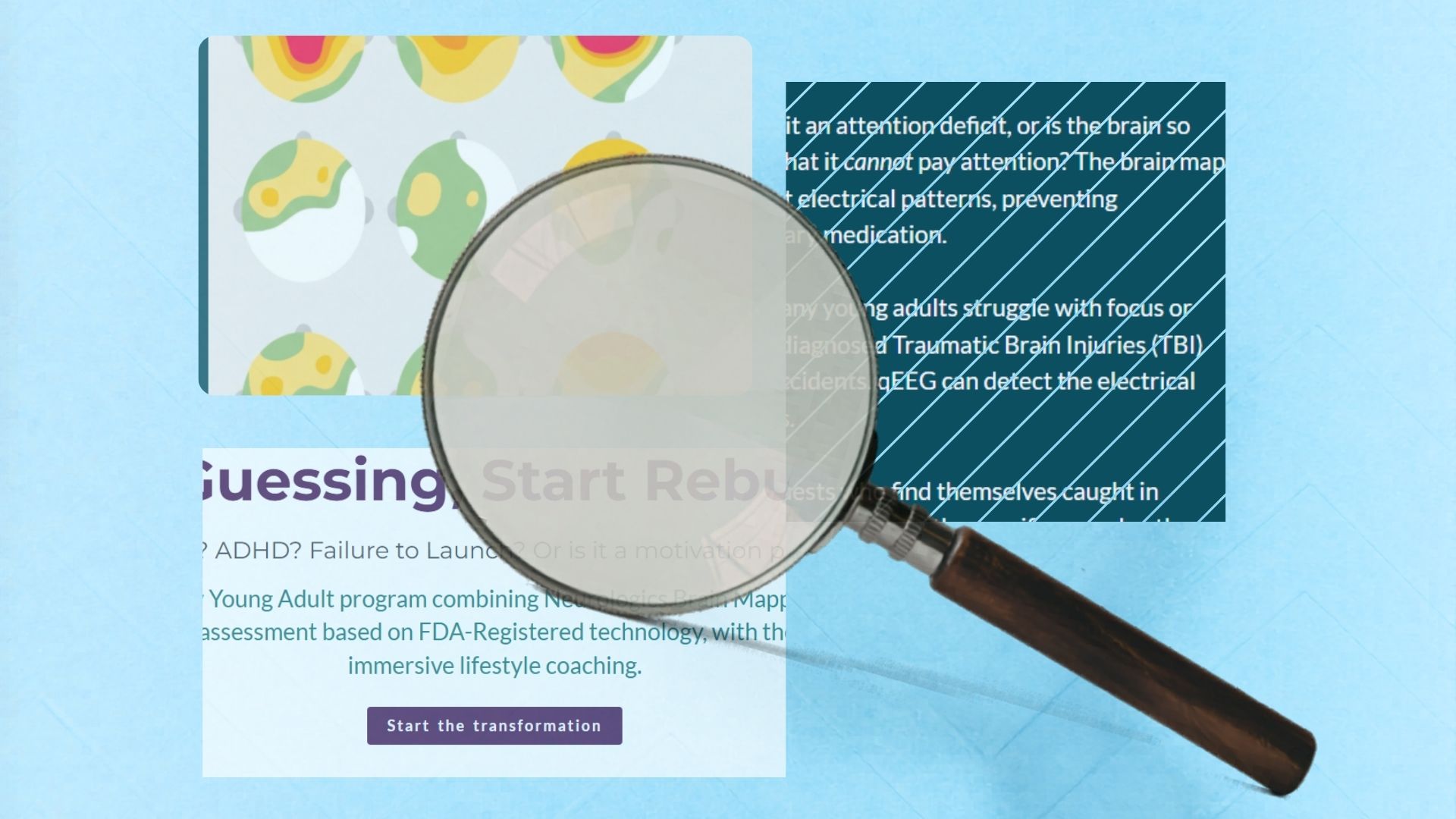
And there it was, right in the subject line, in the body copy, woven into every claim they were making about their services:
“FDA-registered technology.”
Immediately, I felt curious.
A split second later, I felt deep concern.
Because after 16 years in this field, training providers, supporting professionals, and serving families, I can say this with confidence: most people don’t know what “FDA registered” actually means.
They often assume it means the device, and even the service being offered, has some kind of FDA seal of approval.
It doesn’t.
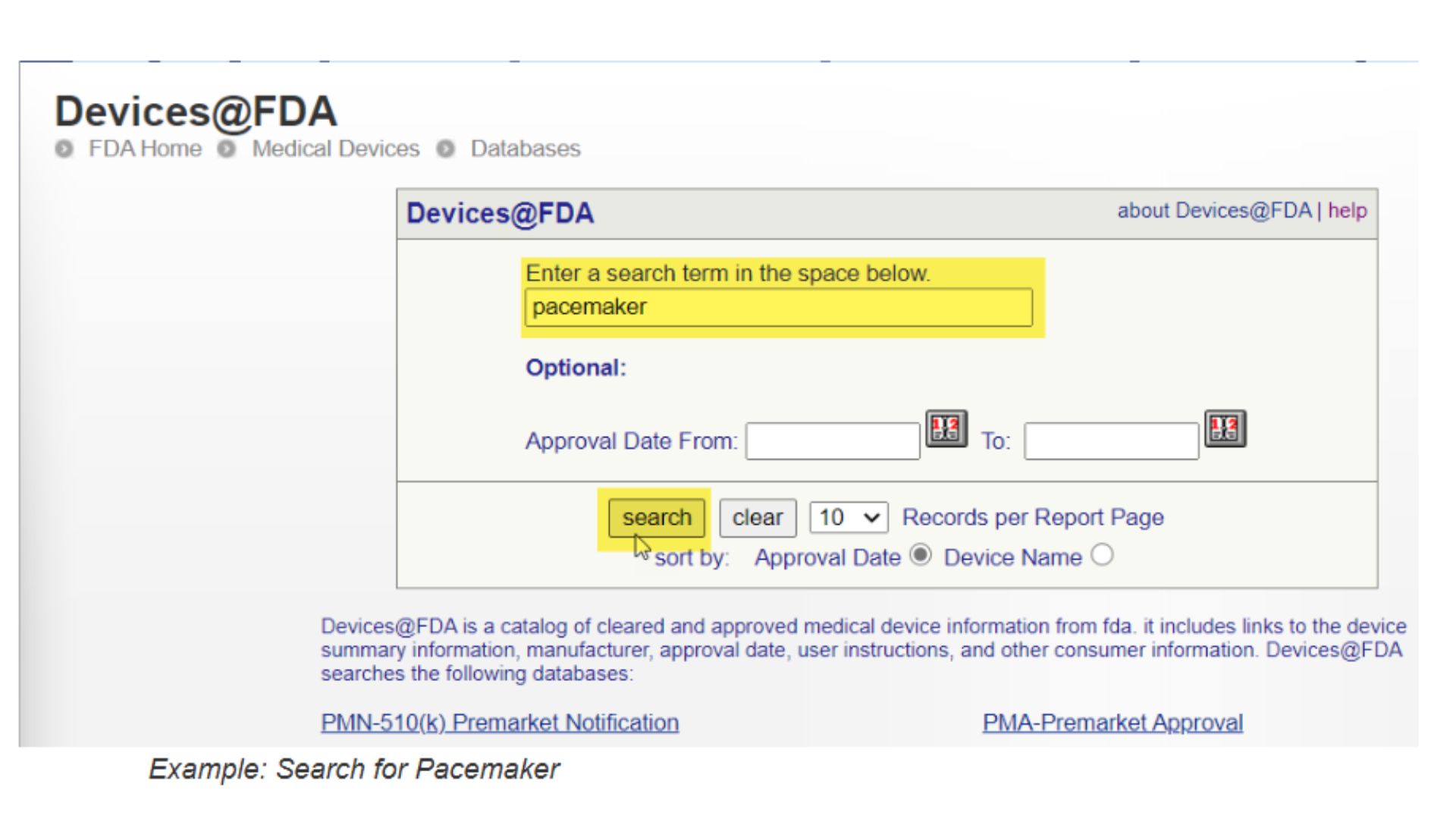
So I went to the therapeutic program’s website and followed the trail to the company providing the technology being used for neurofeedback services.
Then I found other programs using that same phrase “FDA registered” to market their services.
And the more I looked, the more compelled I felt to write this edition of the NeuroContrarian.
Because here’s the thing: families are choosing where to turn for help, and practitioners are choosing what to trust, based on those two words: “FDA registered.”
They’re spending money.
They’re choosing providers.
They’re placing hope in a phrase that sounds official.
But FDA registered doesn’t mean what most people think it means.
I reached out to the FDA directly, hoping to speak with someone.
I haven't heard back yet. I will keep you posted.
But…I did the research.
And I have to share what I found because you deserve to know.
What This Looks Like for Families

Imagine you're a parent. Your young adult is struggling. Maybe it's focus, maybe it's anxiety, maybe it's coming out of a tough few years. You're looking for real answers and solutions. You find a program that sounds promising.
And right there on the website, in bold, at the top of the page you read:
"FDA-registered technology."
Next to claims that this technology can tell the difference between ADHD and anxiety. That it can detect electrical patterns in the brain from old concussions that MRIs miss.
A parent reading this reasonably concludes: the federal government has reviewed and endorsed this.
They have not.
That’s where the problem begins.
The diagnostic claims being made go far beyond what a biofeedback device is authorized to say under its actual clearance language.
Families need accurate information.
They deserve to know what they’re really choosing, not what the wording may lead them to believe.
They are often in crisis, desperate for answers, and spending more money than they have.
I know this because that was once my family. And those are the families we have served for over a decade.
This affects the field, too. Youth residential treatment facilities and therapeutic programs have faced federal scrutiny.
When language implies FDA endorsement, or suggests claims the FDA has not validated, it puts the field at greater risk.
So let’s be clear about what “FDA registered” actually means.
The Uncomfortable Truth
Here is the uncomfortable truth:
"FDA registered" does not mean what most people in this field, and most families, think it means.
It does not mean the FDA reviewed the device.
It does not mean the FDA tested it.
It does not mean the FDA endorsed it for any particular use.
Here is what it does mean: the company paid a fee and filed a form.
That’s it. Let that sink in.
They filed a mandatory administrative form required of virtually every medical device business operating in the United States
Directly from the FDA's Own Consumer Guidance Page
"When a facility registers its establishment and lists its devices, the resulting entry in the FDA's registration and listing database does NOT denote approval, clearance, or authorization of that facility or its medical devices."
That's not my interpretation. That's the FDA's own words. The FDA also states that it does not issue device registration certificates and does not “certify” registration information for registered and listed businesses.
And yet "FDA-registered technology" is appearing in hero banners, marketing emails, and sales materials across the neurofeedback field, positioned as proof of:
- safety
- legitimacy
- federal endorsement
It is none of those things.
This matters because professionals in private practice, therapeutic programs, and families deserve to know, and should know, what they are actually saying when they use this language.
The neurofeedback field deserves better than having its credibility undermined by claims that don't hold up.
The Framework
Three Levels. Three Very Different Things.
The FDA has three very different levels of review for medical devices.
Most people use the words interchangeably.
They are not interchangeable.
Level One: FDA Approved
“FDA approved” means a device went through a rigorous process called Premarket Approval, or PMA.
That includes scientific and regulatory review to evaluate whether a Class III medical device is safe and effective for its intended use. The FDA describes PMA as the process used to evaluate safety and effectiveness for Class III medical devices.
Think cardiac implants. Deep brain stimulators.
This is the highest bar.
Almost nothing in the neurofeedback or EEG biofeedback space qualifies.
So if you hear “FDA approved” used to describe these systems, it is not accurate.
Level Two: FDA Cleared
“FDA cleared” means a device went through the 510(k) process.
The manufacturer showed that the device is substantially equivalent to a legally marketed device. The FDA describes a 510(k) as a premarket submission used to demonstrate that the device to be marketed is as safe and effective, meaning substantially equivalent, to a legally marketed device.
This is the correct term when a device has gone through 510(k).
And several EEG biofeedback systems do have legitimate 510(k) clearance.
But here’s the part most people don’t realize:
Clearance comes with a specific intended use.
For biofeedback devices, the federal regulation, 21 CFR 882.5050, describes a biofeedback device as an instrument that provides a visual or auditory signal corresponding to physiological parameters, including brain alpha wave activity, so the user can learn to voluntarily control those physiological parameters.
In other words: biofeedback and self-regulation support.
Not diagnosis.
Not treatment of specific conditions.
Not differentiating ADHD from anxiety.
Not detecting TBI markers.
So yes, clearance is meaningful.
But the scope is narrow.
And marketing a cleared device for uses beyond that indication creates a problem, regardless of what the research suggests or what a clinician believes.
Here is the important distinction:
The FDA regulates devices and how they are marketed.
Licensed clinicians may have more flexibility in how they apply tools within their scope.
But device marketing must stay within cleared indications.
So “cleared” matters.
But it does not mean “approved.”
Level Three: FDA Registered
"FDA registered" simply means the manufacturer filed an annual registration with the FDA as required by law for medical device businesses.
The FDA does not review, test, or issue a certificate for the device as part of this annual process.
In fact, the FDA warns that registration certificates can look official, but the FDA does not issue device registration certificates, and registration does not mean approval, clearance, or authorization.
So what does registration actually mean?
A company filed a required form.
That’s it.
And this is where the disconnect happens.
When “FDA-registered technology” appears next to claims about diagnosing conditions or identifying past injury, it is unsupported.
What the reader assumes and what the phrase actually means are not the same.
A mandatory filing.
Not a review. Not validation. Not endorsement.
Why This Matters to Me
You might be wondering why a company that provides neurofeedback systems and training is writing about this.
Here's why.
When I was searching for answers for my son and eventually drove across the country with a $22K system to try to help him, I wasn't thinking about regulations. I was thinking about my son.
But everything I've built since then, every system, every training, every piece of SYMMETRY Neuro-PT, has been built around one principle:
People deserve the truth about what this is.
Neurofeedback is powerful. I have watched it change lives, including my son's, including my own.

But it is not magic.
It is not a diagnosis.
It is not a cure.
It is a technology-driven learning process for the brain, and when done correctly, with proper measurement, training, oversight, and realistic expectations, creates measurable, lasting change.
That is extraordinary enough. We don't need to overstate it.
And when "FDA registered" is overstated, it becomes shorthand for "federally endorsed and validated" in a marketing email to desperate families.
Everyone gets hurt.
It hurts the families who trusted the claim.
It hurts the practitioners and programs who repeated it without knowing better.
It hurts the field that has spent decades building credibility one honest result at a time.
And it hurts the families who haven't found neurofeedback yet, the ones who might discount the whole field if they feel misled by the ones who came first.
I know what it feels like to be the family searching for answers.
That’s why I care so much about making sure families know what they are actually choosing.
So this is me saying:
We can do better.
We must do better.
The field is too important not to.
What Accurate Language Looks Like
A Practical Guide for Practitioners and Programs
If you work in this space - as a practitioner, a program operator, or a marketer - this is what accurate language looks like:
If a device has 510(k) clearance:
Say:
This device has FDA 510(k) clearance for its specific intended use.
Not:
“FDA approved” or “FDA registered” as a quality claim.
If a manufacturer is registered:
Say:
The manufacturer is registered with the FDA as required by law.
That’s it.
Not:
“FDA-registered technology” as proof of safety or efficacy.
For clinical work beyond relaxation or self-regulation support:
Be clear about the distinction.
Neurofeedback is used clinically by licensed practitioners within their scope of practice. Device clearance covers the device’s cleared intended use; clinical applications are part of the practitioner’s professional judgment.
What not to say:
“FDA approved” for a cleared device
“FDA certified” - the FDA does not certify devices
The FDA states that it does not issue device registration certificates and does not certify registration information for businesses that have registered and listed.
For informed consent:
Tell clients what the device is cleared for.
Tell them what you are doing clinically.
Help them understand how biofeedback and self-regulation support the clinical work you’re doing.
That’s integrity.
And integrity is what builds lasting trust with families.
What to Do Next
If this raised questions for you, that’s a good thing.
That’s where informed decisions begin.
I put together a full reference document so you can do your own deep dive. It includes the primary sources, regulation citations, FDA database links, clearance numbers, and the quotes referenced in this issue.
If you’ve seen this language used in a way that gives you pause, let this article be your cue to ask more informed questions about what is actually being claimed, and what may only be implied.
The field grows when we’re willing to talk honestly with each other.
Neurofeedback is powerful enough to stand on its own truth.
We don't need to dress it up.
We need to get it right.
One brain at a time,
FAQ: FDA Registered, FDA Cleared, and Neurofeedback
1. What does “FDA registered” mean?
“FDA registered” means a manufacturer or facility has completed required registration and listing with the FDA. It does not mean the FDA has reviewed, tested, cleared, approved, certified, or endorsed the device. The FDA states that registration and listing do not denote approval, clearance, or authorization.
2. Is FDA registered the same as FDA approved?
No. FDA registration and FDA approval are different. FDA approval generally refers to Premarket Approval, or PMA, which the FDA describes as the scientific and regulatory review process used to evaluate safety and effectiveness for Class III medical devices.
3. Is FDA registered the same as FDA cleared?
No. FDA clearance usually refers to the 510(k) process. A 510(k) submission is used to demonstrate that a device is substantially equivalent to a legally marketed device. FDA registration is an administrative filing, not a device review.
4. What does 21 CFR 882.5050 say about biofeedback devices?
21 CFR 882.5050 describes a biofeedback device as an instrument that provides a visual or auditory signal corresponding to physiological parameters, including brain alpha wave activity, so the user can voluntarily control those physiological parameters.
5. Why does this matter in neurofeedback marketing?
Because families and practitioners may assume “FDA registered” means the device or service has been reviewed, cleared, approved, or endorsed by the FDA. That assumption can create confusion, weaken informed consent, and undermine trust in the field.
If you haven't read our last article, Neuroplasticity Is Always Working - That’s the Problem You should! Click here to learn brainwaves is often the missing piece while talking about Neuroplasticity.
contact
social
SYMMETRY Neuro-Pathway Training © 2025