
Customer Spotlight: Dr. William Haas of VYVE Wellness
At VYVE Wellness in Charlotte, North Carolina, Dr. William Haas has built an integrative and regenerative medicine practice around a simple idea: sometimes the best results come from using the right combination of tools rather than relying on one approach to do everything.
In this Customer Spotlight, SYMMETRY Neuro-Pathway Training founder Dianne Kosto talks with Dr. Haas about why he added qEEG brain mapping and neurofeedback to VYVE’s already extensive wellness offerings, what his team learned during implementation, what he has observed in patients, and what he would tell another provider considering neurofeedback.
Tell us a little about VYVE Wellness and your approach.
Dr. William Haas: The way I describe VYVE is that it’s an integrative and regenerative medicine clinic that ultimately specializes in a lot of different restorative modalities.
Everybody’s journey here ends up being quite different, but I think the thing that differentiates us, especially in our ability to do things like neurofeedback, is the breadth of the toolbox of service offerings that we have.
My philosophy is that sometimes you have the option of doing one thing 20% better or 20 things 1% better. That has always resonated with me.
We’ll incorporate a lot of different modalities to work on different areas of healing and optimization within the body. We’re not just leveraging one tool and hoping that one tool will carry the full weight.
What types of patients do you primarily serve?
Dr. Haas: Generally, our ideal patient is going to be the 40- to 60-year-old individual who is typically high-performing.
They’re quite busy balancing the demands of work and life. They have a successful career and they’re trying to balance that with family, while still being very focused on maintaining optimal health.
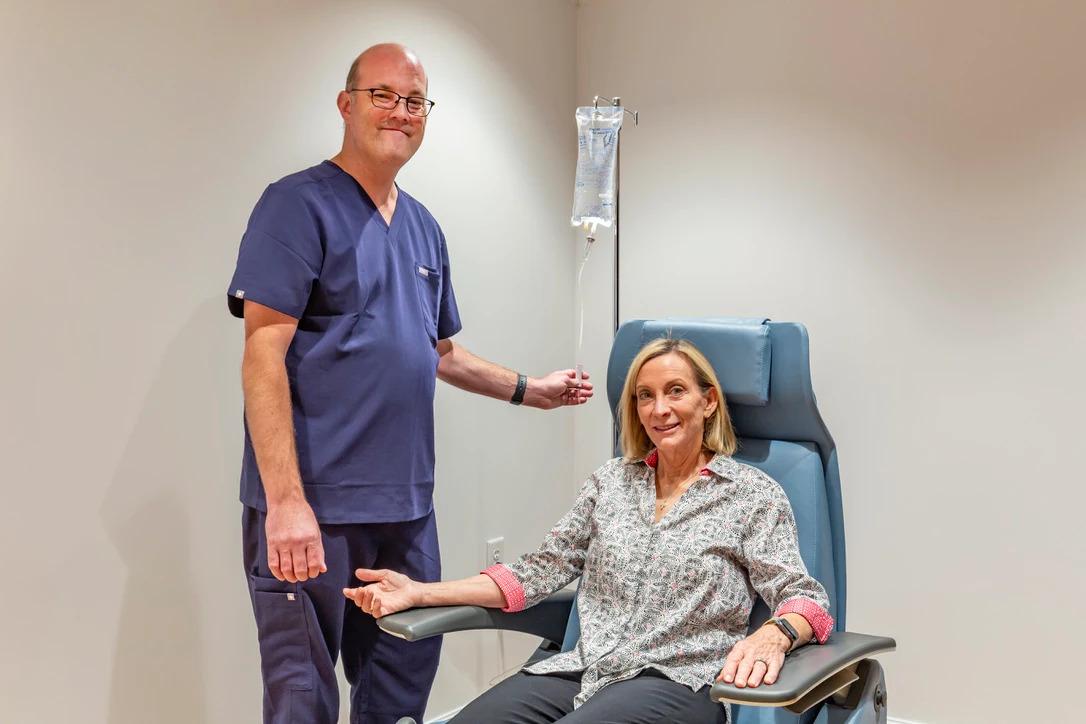
A lot of those individuals will struggle with sleep, fatigue, insomnia or high stress. You can start to see the overlap with neurofeedback and how that blends into other areas. It can be one piece of the overall puzzle these high performers are struggling with.
What were you seeing that made you feel neurofeedback needed to become part of the picture?
Dr. Haas: Every stage of the journey starts with some sort of diagnostics.
A lot of times we focused more on blood work and cellular diagnostics, and I found that left some gaps.
Sometimes it’s hard to see direct correlations to things like stress beyond cortisol or patterns of micronutrient deficiencies.
Neurofeedback, to me, was the best plug where we’re moving away from just looking at neurochemistry to the actual brainwaves and brainwave states.
With a lot of these high performers, you see patterns where they kind of get stuck. The only way to really tease that apart was starting with a brain map.
And for a lot of these individuals, neurofeedback is not something top of mind. They haven’t heard about it before. So I think you almost have to lead into showing them what you’re actually seeing.
It’s somewhat uncanny to have patients tell you, “Wow, you described in my brain map exactly what I’m feeling and what I’m seeing.”
It’s very validating. Then they kind of have hope in the fact that there can be a plan forward.
What stood out to you about SYMMETRY Neuro-Pathway Training?
Dr. Haas: The simplicity of the reports.
As a clinician who wasn’t as familiar with neurofeedback, I got introduced to it as an aside and started researching it and trying to learn.
It can be a very confusing world.
I felt SYMMETRY was a nice, clean presentation.
The other thing I liked was the correlation between the subjective questionnaires, what they’re actually experiencing, and then how that bridges over to the map.
It gives you a nice way to track what’s happening on the brain map, but also how they’re feeling and how the two correlate.
Sometimes you’re looking at something and thinking, “I see this, but how is this showing up in my life?”
That subjective piece that ties into the brain mapping with SYMMETRY is very useful.
Were you concerned about the learning curve?
Dr. Haas: One of the things I was concerned about was just learning it.
How do I teach my patients?
The team at SYMMETRY was very helpful in getting us off the ground.
We were able to have regular calls and review brain maps, which made all the difference with successfully implementing this.
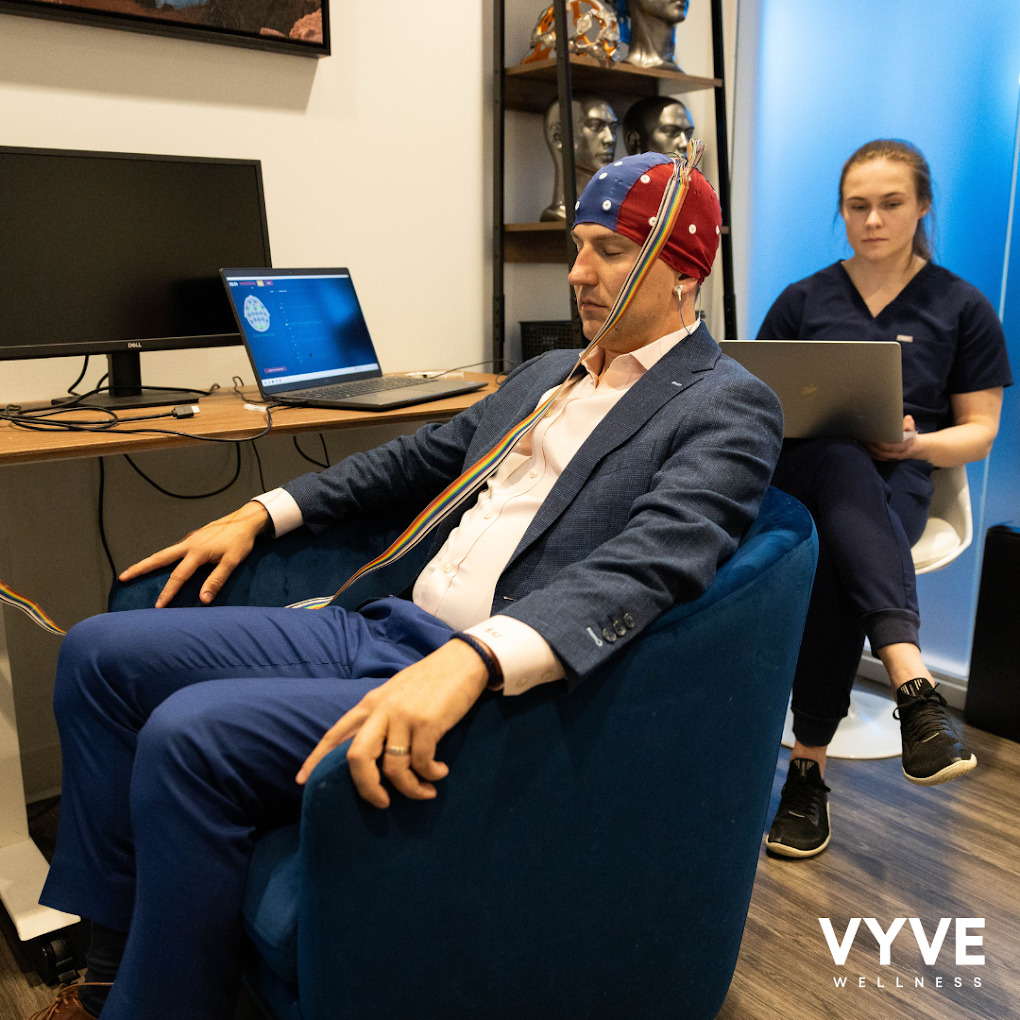
I didn’t feel like we had to master and be neurofeedback experts from day one.
We had experts alongside us where we could schedule calls, review brain maps, get feedback and say, “Here’s what we’re thinking. What do you think?”
That constant guidance has been helpful.
What was the onboarding process like for your team?
Dr. Haas: We actually had someone from SYMMETRY come onsite and walk us through it.
They taught us how to do the brain maps and the technical components.
That’s always the scary thing when you have new devices and hardware. It’s, “How do I actually use this thing?”
It was a great day.
We made sure all the staff members who were involved in doing the brain mapping and setting up neurofeedback were comfortable with how the equipment worked.
They all surprisingly said it was quite easy and intuitive once they got their hands on it.
How have you worked brain mapping and neurofeedback into what VYVE already offers?
Dr. Haas: I’m moving in the direction of making brain mapping an offering in one of our diagnostic packages, where it is woven in as one of the options for new patients coming into the practice.
Even if you didn’t come into the practice thinking neurofeedback was going to be a tool on your journey, you’re starting to get exposed to what’s going on “under the hood” of the brain without introducing the concept of neurofeedback just yet.
Once they do that brain map, we can present neurofeedback alongside the suite of tools we have.
It’s not done in isolation.
We’re talking about how we get the most out of the neurofeedback training session.
One example is that we may use a combination of red laser and hyperbaric oxygen before the actual training.
The way I describe neurofeedback to my patients is that it’s kind of like exercise for the brain.
That’s one example of some of the tools we may wrap around neurofeedback.
What have you noticed as patients move through neurofeedback?
Dr. Haas: I always tell them the same thing you taught us, which is that you have to have this period of patience where it can take eight to 12 sessions to start noticing the impact and the difference.
That’s something I have to coach my patients through.
One of the things I’ve noticed is how quickly I’m able to start shifting patients who felt stuck otherwise.
You have patients who felt like, “I’m not sleeping no matter how many medications I’ve taken.”
Then you start to see that shift.
They get really excited when they start to see those sorts of things happening, or when they have periods of anxiety and say, “Normally these sorts of stressors would just completely put me in a tailspin, and I’m able to handle it.”
It’s not that they don’t get stressed by it.
They just don’t go into that tailspin anymore.
It’s really powerful to see those transformations happen.
Is there a particular patient story that stands out?
Dr. Haas: One recent patient had persistent daily migraines.
She was a lawyer working from home and would frequently feel like she wasn’t able to get all of her work done or would have to put clients on pause because of the frequency of the migraines.
We used a combination of different tools, but the backbone of the plan was neurofeedback.
We were able to see a pretty drastic reduction.
Instead of having six or seven migraine episodes a week, it went down to one or two for her.
That was a huge win.
You’re talking about a lawyer who works 60 to 70 hours a week. Trying to manage that load while dealing with a migraine every day is very different from managing it when you’re not battling through a migraine headache every day.
How has offering neurofeedback affected the business itself?
Dr. Haas: It’s made us more well-rounded.
We have an offering to help our patients regardless of where they are on their health journey.
It keeps patients from feeling like their journey ultimately just ends after they’ve done something like hormone replacement.
You fix the hormones, and they’re still struggling with sleep.
Neurofeedback gave us a bigger suite of tools to continue helping patients who were already inside our practice.
That has been very rewarding.
Does it help differentiate VYVE from other wellness clinics?
Dr. Haas: I like to think we’re already different, but I think it does add yet another layer.
Especially in the wellness space, where there are a lot of franchises coming into the market focused on IVs, hormones and peptides.
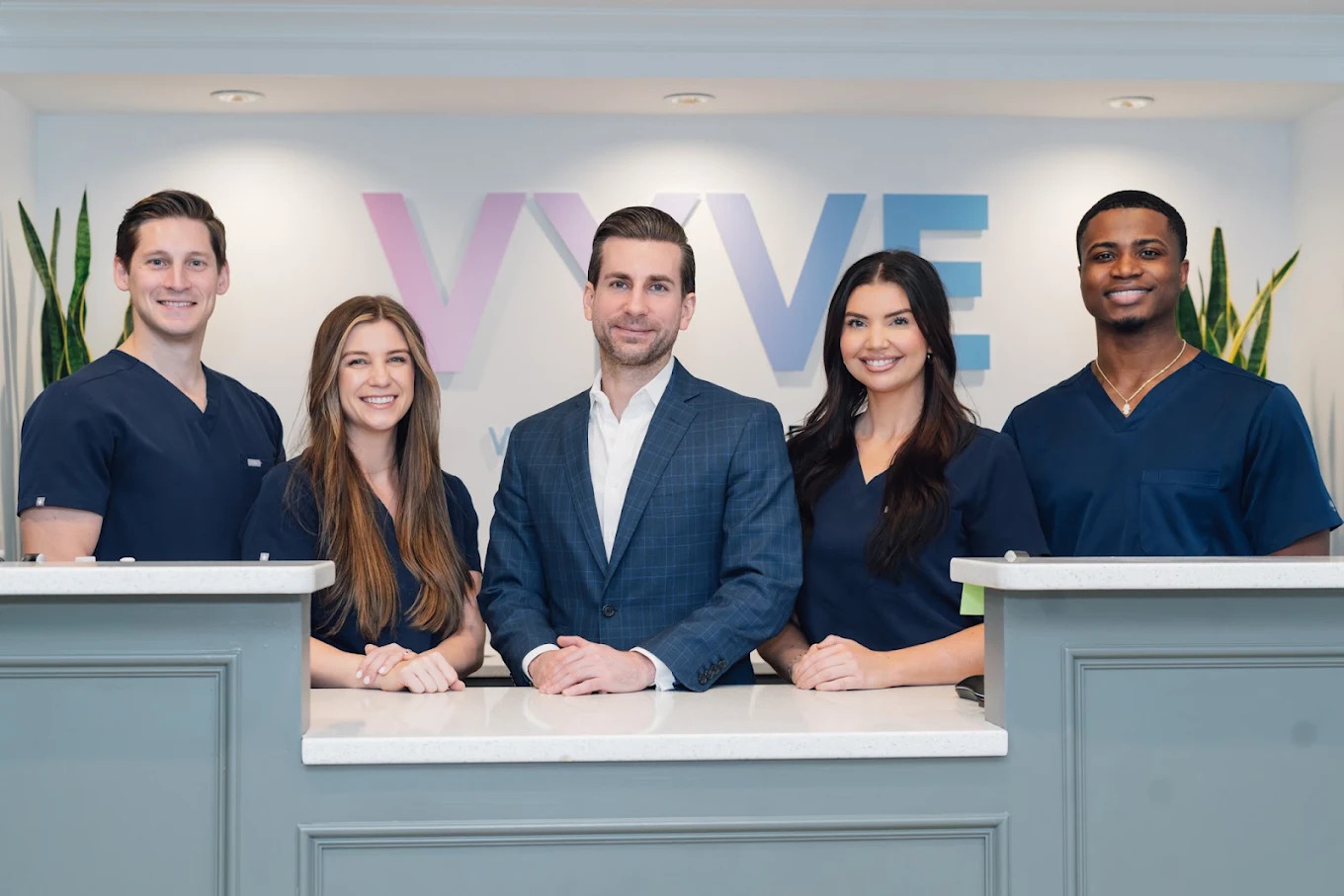
This reinforces the fact that we’re an integrated medicine clinic first and foremost.
We’re trying to approach this in the most holistic manner, and neurofeedback is another tool in the toolbox.
What would you tell another wellness provider who is thinking about adding neurofeedback?
Dr. Haas: The biggest thing is don’t let the potential overwhelm, or the fact that you may not have previous training or experience in this, hold you back.
Everything’s figureoutable.
The team at SYMMETRY has been great at coaching and teaching myself and, most importantly, my team members who help execute this.
Don’t let that be the thing that gets in the way.
If you had to do it again, is there anything you would do differently?
Dr. Haas: Maybe the one thing we would have done differently was really understanding the market and the marketing around it.
Know how to speak to it.
People aren’t searching for neurofeedback therapy. They’re searching for other things.
I think you need to have a well-thought-out plan.
If you have a marketing team, talk to the marketing team ahead of time and say, “Here’s the tool I’m thinking about using. Let’s start developing a plan for attracting new patients for this.”
Where do you see brain-based approaches going in the future?
Dr. Haas: I think the question is, how do we make them part of everyone’s foundational evaluation?
There’s a growing interest among consumers in understanding more about their own health.
What I’d love to see is how we can make the technology we use for in-office brain mapping more accessible.
How do we empower people to become more aware of what’s happening in their brain with tools they may eventually be able to use at home?
What’s next for VYVE Wellness?
Dr. Haas: We’re expanding some of the spaces we talked about earlier.
We’re creating more dedicated areas for some of the services where we leverage neurofeedback.
We’ll have a new dedicated space for private neurofeedback sessions, near the hyperbaric oxygen and red laser cap areas.
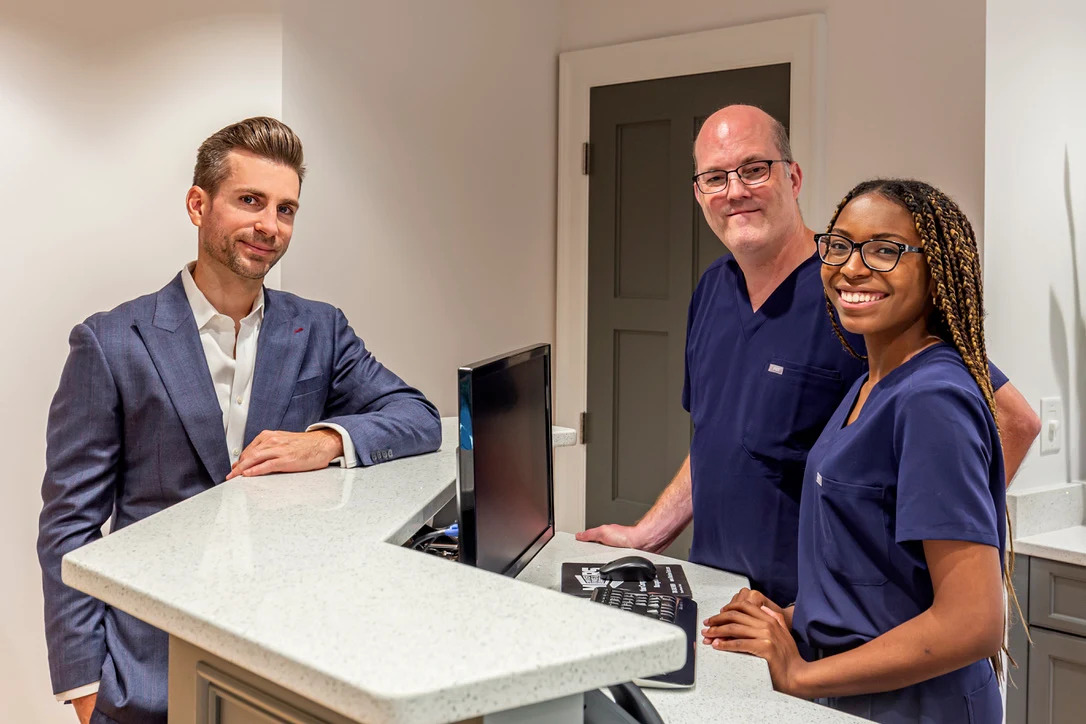
I’m excited about that coming up.
Learn More About VYVE Wellness
VYVE Wellness is based in Charlotte, North Carolina. While some services can continue remotely once someone is established with the clinic, Dr. Haas says most patients begin with an in-person visit.
VYVE also works with patients who travel to Charlotte from around the country.
Visit VYVEWellness.com and select Get Started to complete a few questions and schedule a free discovery call with their team.
contact
social
SYMMETRY Neuro-Pathway Training © 2025