
[#008] What Counts as Evidence? Rethinking How We Test Personalized Alzheimer's and Neurofeedback Protocols
What Counts as Evidence?
I was listening to The People's Pharmacy interview with Dr. Dale Bredesen, the neurologist known for his work on reversing early-stage Alzheimer's through personalized, multi-factor protocols, when something he said stopped me.[1]
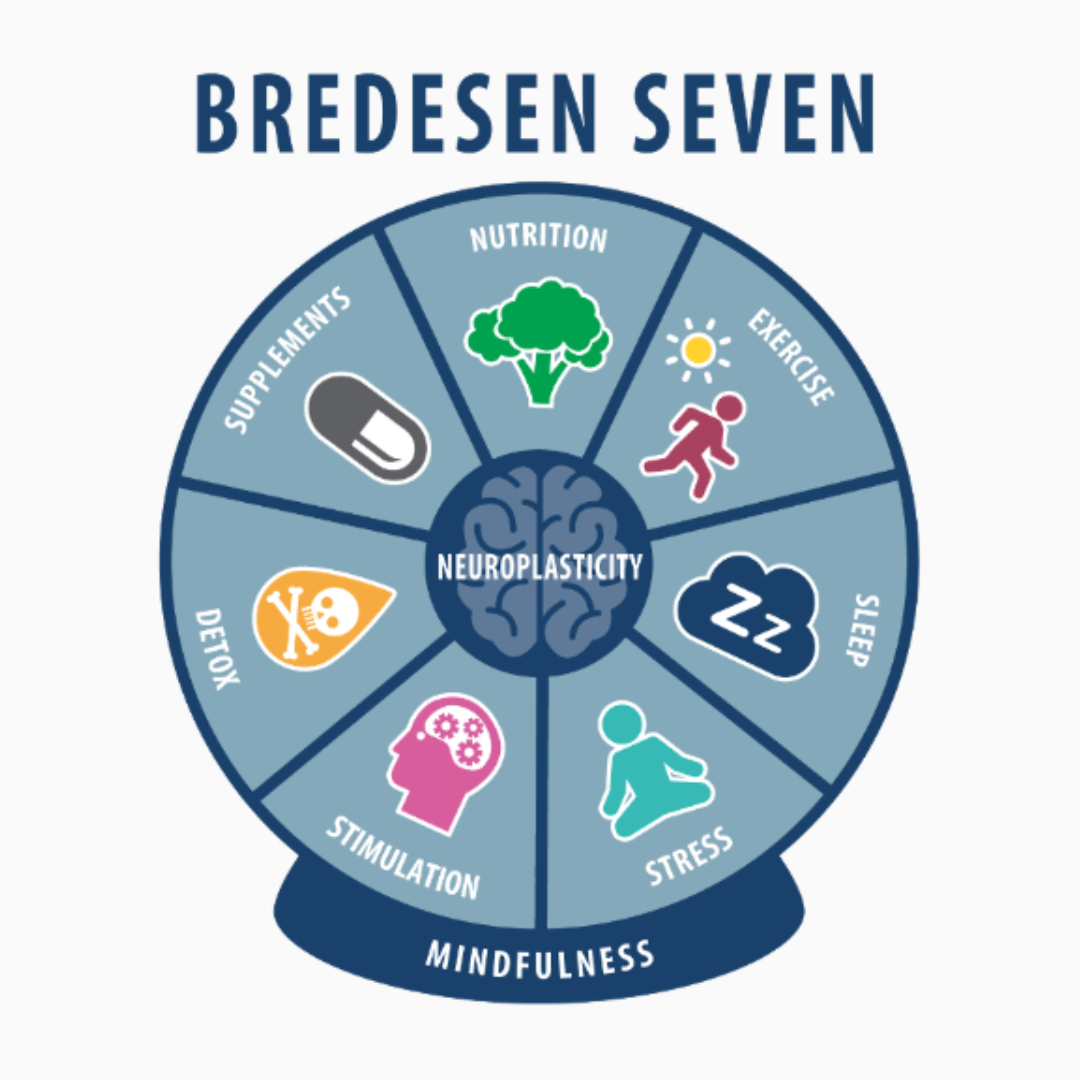
He described submitting a proposal to study his personalized Alzheimer's protocol. The response? It was rejected because it was "too complicated."
It resonated with me instantly, because I've heard versions of that same response for years in the world of neurofeedback.
"It hasn't been proven." "There's not enough evidence." "It's too individualized."
Neither Dr. Bredesen's protocol nor neurofeedback tends to produce the kind of randomized controlled trial science calls the gold standard, and that's not an accident. Both are built around the individual, not the diagnosis. A trial works by enrolling people who match on the underlying cause, so the only thing left to vary is the treatment. But someone can walk in with a TBI, a concussion, or lingering fog after a serious illness, and show nearly identical symptoms, while what actually happened inside their brain was completely different. If the people in a study got to the same symptoms by different roads, matching them on symptoms alone doesn't give you the kind of trial an RCT needs.
So the objections aren't wrong. They're accurate.
Why the Model Exists in the First Place
The randomized controlled trial became the gold standard for a good reason. Isolate one variable, compare it to a placebo, and you know with real confidence that the treatment, and only the treatment, caused the change. That's the right tool for one bacteria and one antibiotic. The problem isn't the tool. It's that a lot of what makes people sick, and what helps them get better, was never a single-variable problem to begin with.
Look at Alzheimer's drug trials specifically, and the pattern is hard to explain away. Between 2002 and 2012, 244 drug trials were run for Alzheimer's. 243 failed outright.[2] The one exception, memantine, produced a modest benefit at best. Nearly all of those trials tested one drug, in isolation, against placebo.
Dr. Bredesen has a way of putting why that keeps happening: picture a roof with three dozen holes in it. A drug might patch one of them perfectly. The roof still leaks. That's not proof the patch was worthless. It's proof that testing one patch was never going to answer the question "can this roof be fixed."
It's also not a new problem in medicine. HIV wasn't beaten by one antiretroviral; it took three drugs working together. Cancer and cardiovascular disease follow the same rule: combination approaches outperform monotherapy in nearly every complex chronic illness we've studied. Alzheimer's trials have mostly stayed single-drug. That's not necessarily evidence the disease can't be treated. It may be evidence we've been asking the trials the wrong question.
Ironically, while critics continue to debate personalized approaches, the evidence continues to grow.
A case report published this year in the International Journal of Translational Medicine followed a woman diagnosed with Posterior Cortical Atrophy, a rare, visually-devastating form of Alzheimer's that's historically been considered untreatable.[3] After undergoing a personalized precision-medicine protocol that addressed multiple contributors, including a Bartonella infection, mold toxin exposure, metabolic health, inflammation, sleep, and brain training, she didn't simply stabilize.
She regained the ability to read. She began using a computer again. She returned to cognitive training. MRI volumetrics showed measurable improvements in several brain regions, including the parietal, occipital, and hippocampal areas, and the gains held for more than a year. The authors themselves were careful about what they were, and weren't, claiming: one case doesn't prove the approach works. It argues for a real, controlled clinical trial, and for including this kind of workup in how PCA gets evaluated in the first place.

That's an important distinction, and I respect them for making it.
One case report doesn't establish a new standard of care.
But it should create curiosity.
A Case That Looks Familiar to Me
I have my own version of a case like that, from our own files.
A 74-year-old client came to us with a genuinely tangled picture: Mitochondrial Deficiency MC-1, ADHD, and lingering trauma from a cervical disc injury in a car accident years earlier. Decreased balance. Muscle weakness. Shortness of breath. Cognitive fog stacked on top of an old injury stacked on top of a metabolic condition nobody had connected to the rest of it.
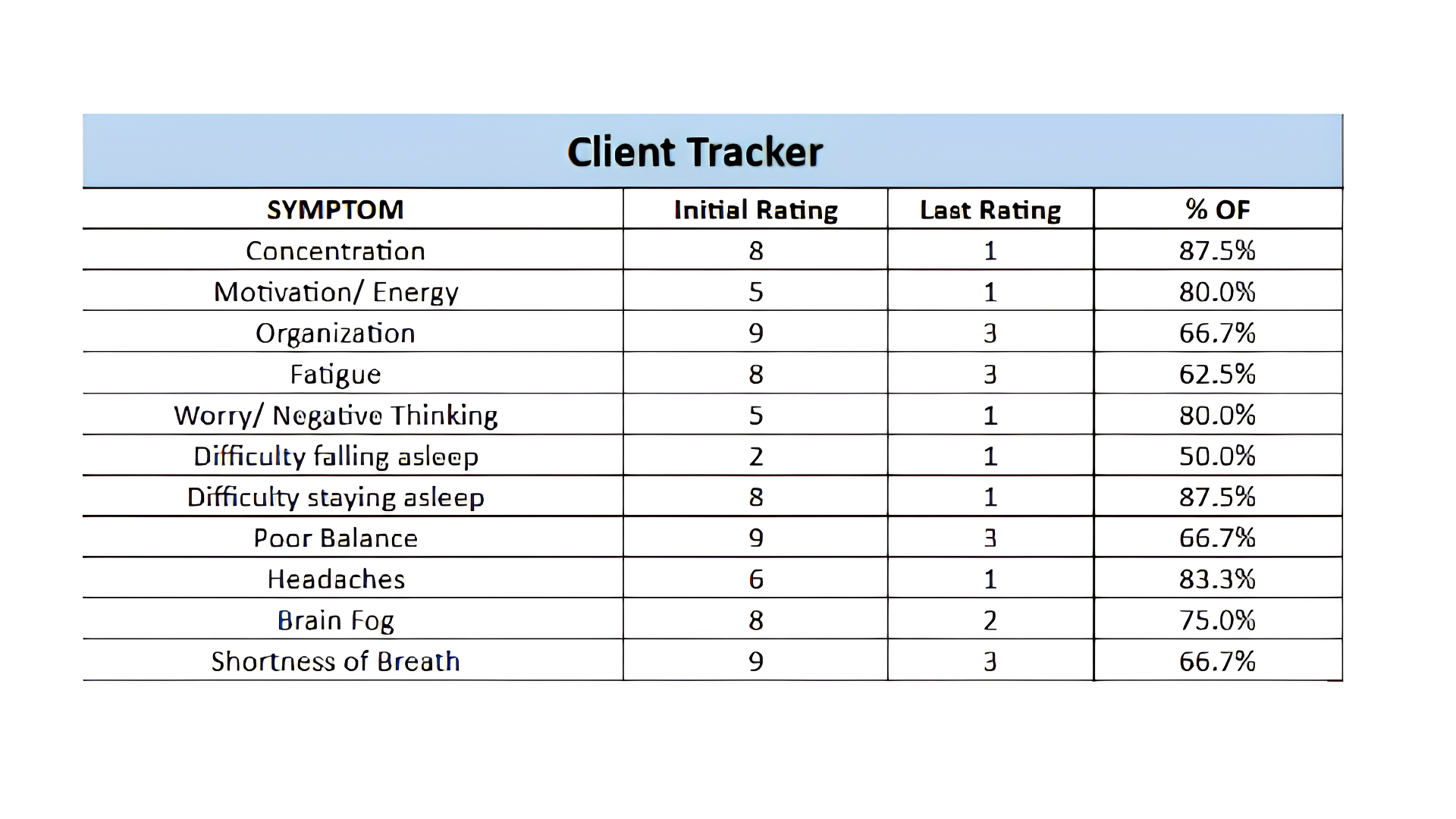
She went through 40 sessions of personalized neurofeedback. By the end, she reported a 73% overall reduction in her symptoms, with improvements in impulsivity, anxiety, depression, attention, and memory. Her metabolic checklist score dropped from 66 to 32, alongside real improvement in her fatigue and headaches.
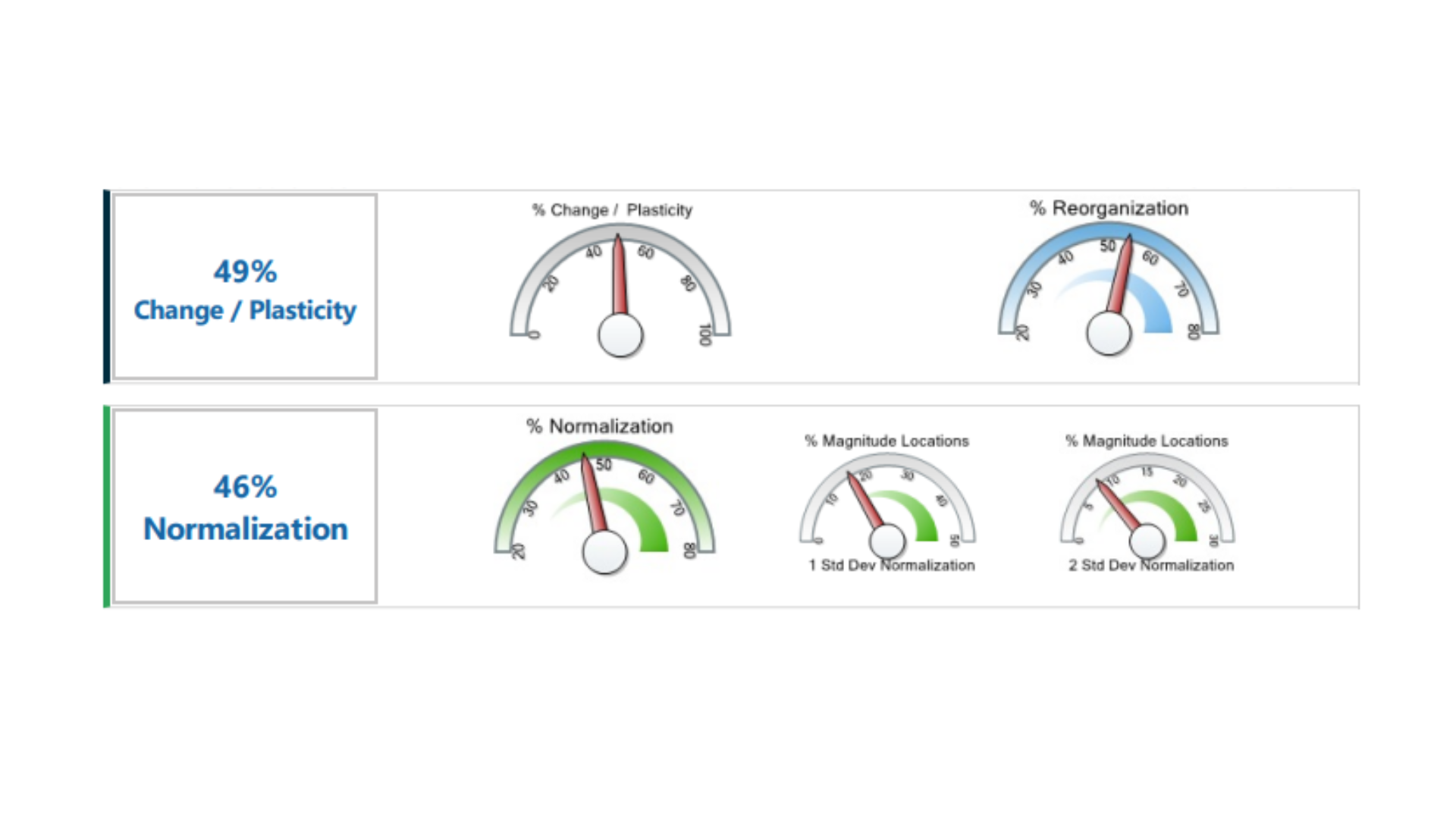
Her qEEG comparison map told the same story from a different angle: a 45% overall change in her brain activity, roughly half of it reorganization, just under half of it normalization toward a healthier pattern.
Neurofeedback was one part of her care. When the brain is learning but someone still doesn't feel better, that's a signal to look elsewhere, a sleep specialist, metal toxicity, diet, whatever else might be in the way. She was treated as one interconnected system, not a checklist of isolated complaints.
Two Kinds of Evidence, Side by Side
The symptoms we track aren't a fixed checklist. The client, and sometimes their therapist, works with our team to decide what to measure: anxiety, sleep, memory, whatever is actually showing up in their life. Progress against those symptoms always gets rated by the client themselves, and also by someone close to them, a spouse or a therapist, filling out that same tracker independently.
The qEEG comparison map is a different kind of evidence entirely. It has nothing to do with what anyone says or observes. It's a record of what the brain itself was doing, before and after, measured by technology.
A 36-year-old client with a history of two concussions, one from sports, one from a car accident, came to us with anxiety, depression, and memory problems. Subjectively, on his own symptom tracker, he reported a 70% reduction in symptoms. Objectively, on the qEEG comparison map, his brain activity showed a 38% overall change, with 60% of that shift moving toward a healthier, more normalized pattern. Subjective and objective data, pointing to the same outcome.
The Honest Counterargument
A good skeptic would raise the obvious point here: a case report can mislead you. So can a single client file. People improve for all kinds of reasons that have nothing to do with the intervention, things like expectation, time passing, or something else changing in their life at the same moment. And "personalized" can become its own trap. If a client doesn't improve, it's tempting to say they needed more sessions, they didn't follow the training plan closely enough, or other medications were interfering, rather than concluding it isn't working for that person. That's a possibility. But it doesn't change the pattern we've seen, or the one Dr. Bredesen describes in his own patients.
A single case can be a fluke. But a personalized, multi-factor protocol producing the same shape of change, again and again, in genuinely complex cases, and having that change show up both in how someone feels and in an objective measurement taken independently of what they said, is exactly the overlap a good skeptic should look for. It's there.
What Multi-View Evidence Already Looks Like
This is what we do with every client, whether anyone ever turns it into a published study or not. We start with a baseline qEEG and a real picture of what was working for that person and what wasn't, before the injury, before the illness, before things went sideways: could they hold a conversation, read for pleasure, sleep through the night, get through a workday. From there, we watch the trend lines as training progresses to see whether the brain is actually responding, not waiting until the end of a program to find out. We track whether those functional things come back, or come back stronger, and whether that lines up with what the qEEG is showing. And we follow up months later, not just when the sessions end.
We know that decades of clinical experience and thousands of patient stories aren't the same as a large randomized controlled trial. But when people consistently report sleeping better, thinking more clearly, reducing anxiety, improving focus, or simply getting their lives back, and when we can also observe measurable changes in brain activity with qEEG and neurofeedback data, those outcomes deserve investigation, not automatic dismissal.
We're not waiting for that trial to keep doing this work. We already use technology to understand and improve nearly everything else in the body, the heart, the gut, hormones, sleep. It's strange to draw the line at the brain. Many of the people who find us have already spent years, and a lot of money, chasing an answer somewhere else first. As the technology keeps improving and becoming more affordable, more of those people will have somewhere to turn sooner. None of this is a silver bullet or a magic pill, and we don't treat it that way. It's one tool, used alongside everything else a person needs. But it's a tool that's working, and that's reason enough to keep using it while the research catches up.
Patients don't experience life through p-values.
They experience it through whether they can work again, remember a conversation, read a book, or enjoy dinner with their family. Even the FDA agrees those things count: it accepts patient-reported, health-related quality of life as legitimate evidence, not just a soft add-on to the "real" data.[4]
Science should absolutely remain skeptical.
But skepticism should lead to better questions, not closed doors. Part of why this is hard to study is that the problem itself doesn't move in a straight line. Brainwave dysregulation is closer to solving a Rubik's Cube than following one clean path: some pieces turn forward, some turn back, then reverse again, always moving toward one thing, better overall organization.
Dr. Bredesen made a point in that same interview that stuck with me: it really doesn't matter whether his colleagues are convinced. What matters is whether people are getting better. I agree with him.
I think about that every time I read something a client wrote. "Last week I woke up and I felt good. The most normal I've felt in a dozen years. It hit me that day, things are changing." Or a mother describing her daughter, who has ADHD and autism: "It no longer feels as if her brain is on fire."
No RCT captures that. But that's the whole point of this work.
If you're curious what's actually happening in your own brain, a qEEG Brain Map is where that question starts.
[Explore what a Brain Map shows →]
One brain at a time,
Dianne Kosto, SCN Founder & CEO,
SYMMETRY Neuro-Pathway Training,
The NeuroContrarian
Faq
Neurofeedback hasn't gone through the same large randomized controlled trials used to test drugs, largely because it's personalized to each client rather than standardized. What does exist is a growing body of individual case data combining self-reported outcomes with objective qEEG brain measurements.
A qEEG (quantitative electroencephalogram) is a recording of a person's brainwave activity that gets compared against normative data to identify patterns of dysregulation. It's used before and after neurofeedback training to measure whether the brain's activity is changing, independent of what the client reports feeling.
Randomized controlled trials work best when everyone in the study shares the same underlying cause and gets the same single treatment. Personalized, multi-factor protocols are built around the opposite idea, that different people with the same symptoms often got there through different underlying causes, so a one-size-fits-all trial design doesn't fit the approach being tested.
References & Resources
- The People's Pharmacy, Show 1412: "Beyond Amyloid: The Science That Could Change the Course of Alzheimer Disease," interview with Dr. Dale Bredesen. peoplespharmacy.com (Please confirm this is the correct episode before publishing — matched by content, but the "too complicated" anecdote couldn't be independently verified in this specific episode.)
- Cummings JL, Morstorf T, Zhong K. "Alzheimer's disease drug-development pipeline: few candidates, frequent failures." Alzheimer's Research & Therapy, 2014;6:37. alzres.biomedcentral.com
- Rutland KM, Nathan N, Kim C, Bredesen DE. "Successful Treatment of Posterior Cortical Atrophy: A Case Report." International Journal of Translational Medicine, 2026;6(2):20. doi.org/10.3390/ijtm6020020
- U.S. Food and Drug Administration. "Guidance for Industry: Patient-Reported Outcome Measures: Use in Medical Product Development to Support Labeling Claims." 2009. fda.gov
If you haven't read our last article, "A Diagnosis Is a Starting Point. Most People Treat It Like a Finish Line." You should!
Learn Why a Label Feels Like Relief (And Why That's the Trap)
.contact
social
SYMMETRY Neuro-Pathway Training © 2025